

Banking Portals
Search
Recent News
Being Fraud Smart
October Is Cybersecurity Awareness Month
October is Cybersecurity Month—a timely reminder that protecting your money is just as important as managing it. As fraud and scams become more sophisticated, understanding how they work has become an essential financial literacy skill.
Take the Fraud Awareness QuizContact UsKnow the Risks
Protecting Your Money Is Money Management, Too
Fraud can reach you almost anywhere: through mail, phone calls, text messages, email, social media and websites. Scammers may impersonate your bank, a government agency, a business—or even someone you know. Their goal is to gain your trust and convince you to share information, provide access to an account or send money.
And the problem is growing. In 2025, consumers reported 3 million fraud reports and $15.9 billion in losses to the Federal Trade Commission (FTC). The FTC notes that these reported losses represent only a portion of the actual losses because many scams go unreported.
The numbers are significant, but behind every statistic is a person or family affected by fraud. Knowing the common tactics, recognizing red flags and taking a moment to verify before you act can help protect the money you’ve worked hard to earn.
Below, we’ll look at how scammers reach you, the words and tactics they use, and simple steps you can take to stay one step ahead.
Three Fraud Facts to Remember
Fraudsters are becoming more convincing, even impersonating banks, but knowing a few simple facts can help protect you.
1. Caller ID can be faked.
Even if your caller ID says LNB, the call may be from a scammer. If something doesn’t feel right about the call, hang up and call us directly.
2. Knowing your information doesn’t make them legitimate.
A scammer may know your name or other personal details. That doesn’t mean they’re calling from LNB.
3. Never share security codes.
LNB team members will never ask for your password or your answers to security questions.
Red Flag Language
Words Scammers Love
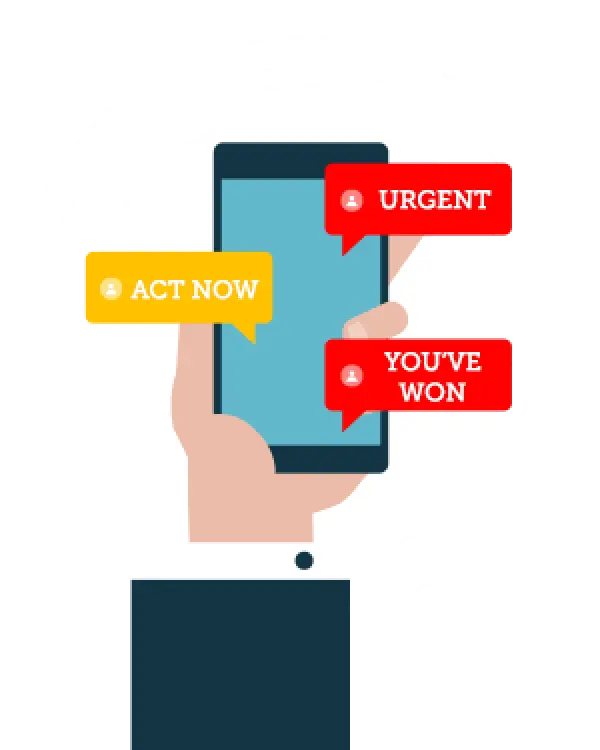
Scammers know that certain words can make us react before we think. Watch for phrases like “Act Now,” “Urgent,” “Your Account Is at Risk,” “Don’t Tell Anyone,” and “You’ve Won!” These high-pressure messages are designed to create fear or excitement and discourage you from taking a moment to verify the request.
When you hear urgency, slow down. Take a breath, ask questions and verify before you act.
Don’t Be Embarrassed. Act Quickly.
Scams can happen to anyone. Fraudsters are skilled at creating convincing stories and using information that makes their requests seem legitimate. If you think you’ve been the victim of fraud, don’t be embarrassed and don’t wait to take action.
Contact us as soon as possible. The sooner you report suspicious activity, the sooner our team can take steps to help protect your accounts. If you provided personal information, shared account credentials or sent money, tell us what happened and follow our guidance.
You should also report suspected fraud to the appropriate authorities, such as the FTC at ReportFraud.ftc.gov (opens in a new tab). Reporting helps create a record of the incident and may help protect others from similar scams.
Something doesn’t seem right? Contact us as soon as possible.
- Being targeted by a scam doesn’t mean you weren’t careful.
- Speaking up and acting quickly is the smart thing to do.
- When in doubt, reach out. LNB is here to help.

Test Your Fraud Awareness
Can You Spot the Red Flags?
Think you know how to spot a scam? Put your fraud awareness to the test! From fake bank alerts to family emergencies, scammers use convincing stories and familiar situations to catch us off guard. Our interactive quiz features five common scenarios and asks what you would do next.
Think you can spot the warning signs? Take the quiz and see how fraud-smart you are.
Take the Quiz!
Have a question?